
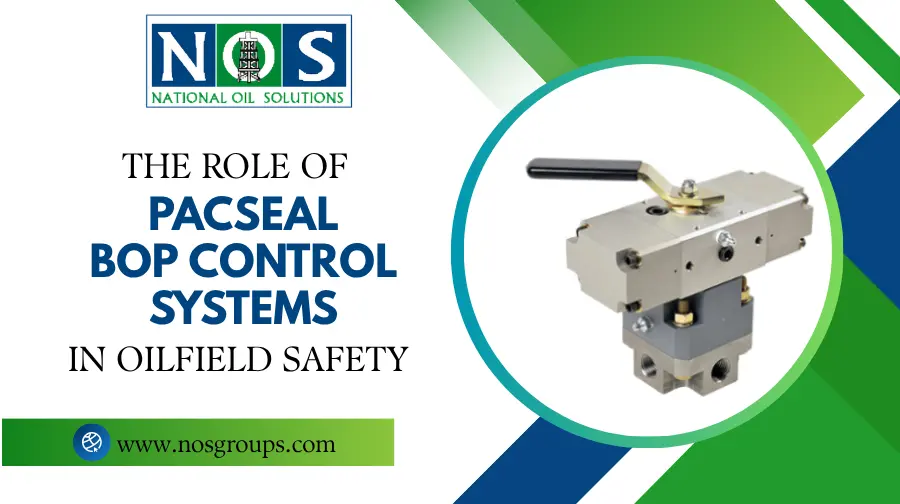
The Role of PACSEAL BOP Control Systems in Oilfield Safety
Businesses operating in the oilfield industry secure high rewards, but they face several risks. Whether we talk about onshore or offshore oilfield operations, both are challenging. The biggest challenge is to control high-pressure wells. Businesses can’t carry out smooth drilling operations without reliable safety systems. The PACSEAL BOP Control System protects workers from sudden blowout risks due to the escape of uncontrolled oil and gases.
These control systems help operators manage pressure and prevent blowouts. Businesses operating in the oilfield industry must invest in a BOP control system to ensure the safety of their workers and equipment. Keep reading to understand how these systems work and how they ensure safer oilfield operations.
Table of Contents
What are PACSEAL BOP Control Systems?
These systems are large hydraulic control units or safety devices that are installed on top of a wellhead. They use high-quality and leak-proof components to safely shut in oil and gas wells during drilling operations. They are designed to perform reliably under tough environmental conditions. The blowout preventers are available in various types.
Surface BOPs are perfect options for land or shallow waters. However, for deepwater drilling, subsea BOPs are used. A BOP control system operates the preventers using hydraulic, mechanical, or electronic signals. In case the well pressure rises suddenly, the system signals the BOP to close the well and prevent the blowout.

Key Components of a PACSEAL BOP Control System
Before we understand how Hydraulic BOP Control Unit in Saudi Arabia work, let’s discuss their main components.
1. Control Console: This is the operator interface. The operator uses this to control the BOP. This can be a simple manual or an advanced touchscreen system. This console sends signals to open or close the BOP preventers.
2. Hydraulic Power Unit (HPU): This is the main component of this safety system. It provides the necessary hydraulic pressure and flow required to operate the BOP.
3. Accumulator: This component stores a large amount of pressurized hydraulic fluid. It makes sure the BOP can still operate even if the main pumps fail.
4. Hydraulic Control Manifold: This part houses the control valves and regulators that direct the hydraulic fluid to the right parts of the BOP stack. PACSEAL’s pressure regulators are used here to maintain accurate pressure control.
5. BOP Stack: This component is present at the top of the wellhead. It contains rams that seal around the pipe and annular preventers sealing the space around the pipe to prevent sudden blowouts.
6. Sensors and Actuators: Sensors monitor the system and share real-time data with the console. Actuators translate the control signals and perform the physical actions of opening or closing the BOP components.



How PACSEAL BOP Control Systems Work
All the main components of PACSEAL BOP control systems we discussed above play a key role in the smooth working of these safety systems. This system works by using a hydraulic power unit that provides the necessary hydraulic pressure and flow. Here is how these systems operate:
- Normal Operation: The control console sends a signal to the HPU, which pumps hydraulic fluid to the control manifold.
- Fluid Control: The control manifold uses control valves to direct the high-pressure hydraulic fluid to the right actuator, either for the rams or the annular preventer.
- Activation: This hydraulic fluid moves the actuator, which opens or closes the BOP as needed.
- Emergency Activation: In case of a signal failure or an emergency, the accumulator provides the stored hydraulic pressure to operate the BOP manually or automatically.
- Pressure Regulation: PACSEAL’s pressure regulators that are built into the system ensure that the pressure is maintained at the right level. This component ensures the BOP offers reliable performance under all tough conditions.

Key Benefits of PACSEAL BOP Control Systems
Not only does a BOP Control system ensure workers’ safety, but it also protects the marine ecosystem. Investing in top-quality BOPs can help you maintain safer and fully compliant operations. Here are the main benefits of these control systems:
1. Prevents blowouts & catastrophic accidents
The main function of this system is that it serves as an ultimate safety barrier against uncontrolled escapes of oil and gases during drilling operations. This system is designed to offer immediate seal protection to the wellbore when an unexpected pressure rise is detected. The operators can operate these systems manually or use sensors for automatic functions. With these systems, you can ensure your workers’ and equipment’s safety with a reliable emergency plan.
2. Enhances operational efficiency
Beyond providing emergency prevention, the modern PACSEAL BOP Control System improves overall drilling performance. It is now available with several advanced features that make it easy to use and maintain. With reliable control systems, you can eliminate issues like unexpected downtime due to equipment failure or repairs. Moreover, the modern BOPs can be controlled or monitored from multiple locations.
3. Reliability in harsh offshore & onshore conditions
PACSEAL BOP Control Systems in Saudi Arabia offered by a trusted supplier like National Oil Groups, operate reliably under harsh conditions. Whether you are engaged in offshore or onshore drilling operations, they promise ultimate safety always. These systems with redundant components have a fail-safe design. This means they can operate without issues even if a part fails. These use special hydraulic fluids that can perform reliably under extreme conditions.
4. Protects marine ecosystems
These control systems prevent sudden blowouts and uncontrolled releases of oil and gases. They help in preventing environmental disasters, like the Deepwater Horizon oil spill. Their ability to quickly seal the well ensures that the oil spills and other uncontrolled releases don’t harm marine life. Additionally, many modern models are using non-toxic and eco-friendly hydraulic fluids. This further helps businesses in meeting the environmental safety guidelines.
5. Main Types of Blowout Preventers
Mainly, three types of BOPs are used by businesses operating in the oilfield industry, which are:
- Annual BOP: These seal the space around the pipes or open holes of various sizes with a flexible rubber-packing element. Their rubber element can expand to match different shapes and sizes.
- RAM BOP: These use a pair of steel rams to mechanically close the wellbore. These are less flexible compared to annual models and are designed for specific conditions.
- Shear BOP: These are a type of RAM BOP that cuts through the drill pipe to completely seal the wellbore in case of emergency.
PACSEAL BOP Control System vs Conventional BOP Control System
| Feature | PACSEAL BOP Control System | Conventional BOP System |
| Pressure Response | Fast hydraulic response | Standard response time |
| Safety | High reliability for emergency shutdown | Depends on system condition |
| Monitoring | Real-time monitoring capabilities | Limited monitoring |
| Maintenance | Easy access to components | More time-consuming |
| Offshore Performance | Designed for harsh environments | Varies by manufacturer |
| Compliance | Supports industry safety standards | Depends on configuration |
BOP Common Maintenance & Compliance Challenges
The BOP systems are now being designed with advanced features, like wireless operation. However, the best-designed BOPs need proper maintenance to ensure reliable performance. Moreover, they must meet the required compliance regulations set by the authorities.
- Corrosion and seal degradation: These are two main challenges that are usually caused by contamination and excessive heat. Using the wrong fluid can also cause chemical reactions that damage the seal. Additionally, the seal degrades over time due to continuous exposure to tough conditions.
- Hydraulic Leaks: Using hardened seals or improperly installing them can result in hydraulic leaks. You must not use the wrong sealant, as misaligned connections can severely affect the system’s safe operations. Always check for physical damage or loose fittings, as they result in fluid escaping.
- Mechanical Wear & Tear: Without sufficient adhesive or lubrication, the friction can damage metal parts of the BOP control system. Moreover, the repeated stress from high loads or vibration also results in cracks.
- Industry Regulations Compliance: You must always purchase products from a reputable and certified manufacturer or supplier. They implement strict checks to confirm that the BOPs can deliver safe performance under tough conditions. Moreover, you must ensure your workers are regularly conducting inspections for damage, repair, and replacement needs.
Ensure Oilfield Safety with Our PACSEAL BOPs
To achieve safer oilfield drilling operations, you need a reliable control system. Whether you operate onshore or offshore, National Oil Groups can help in keeping your oilfield operations safe. As a trusted supplier of PACSEAL BOP Control Systems in Saudi Arabia, we offer customized solutions to clients. Our advanced BOPs with reliable controls provide accurate hydraulic control. With us, you never need to worry about sudden blowouts and other operational risks. Connect with our experts to ensure better safety of your workers and equipment.
Also Read – What Are Spill Pallets and Spill Kits? A Complete Beginner’s Guide