
Diaphragm Pumps in Saudi Arabia: Types, Uses, and Benefits
Diaphragm pumps are positive displacement systems used to move fluids, gases, and slurries in chemical, food and beverage, mining, and other applications. Available in different types, such as air-operated, electric, mechanical, and others, they move fluids and gases safely with reduced risk of leakage.
In oil and gas or water treatment plants in Saudi Arabia, it is needed that industries to use the right pumping solutions that handle liquids and gases efficiently. Diaphragm pumps, here, are a reliable and versatile solution with different designs and applications. To know which one is suitable for your project or operation, understand what diaphragm pumps are, their types, uses, and what to consider when buying them in Saudi Arabia.
Table of Contents
What are Diaphragm Pumps?
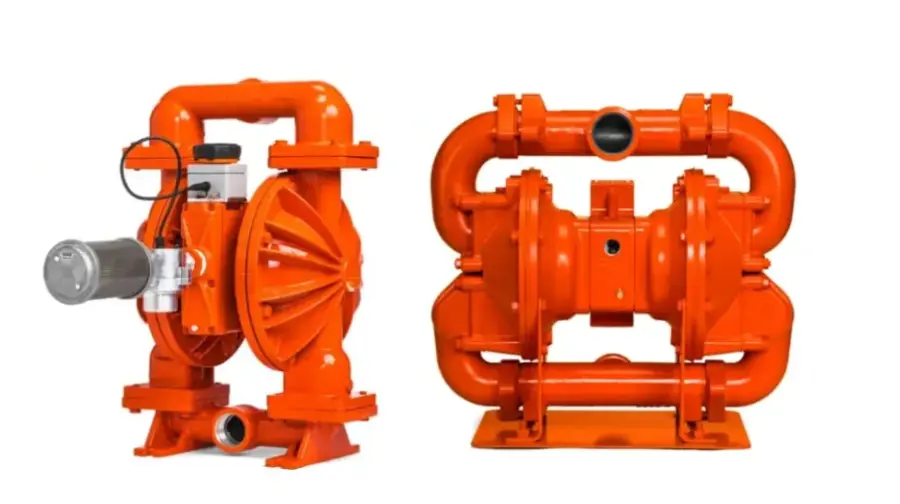
Diaphragm pumps are displacement systems that use a flexible membrane to move fluids, gases, and slurries efficiently. The flexible membrane is made of industrial rubber, thermoplastic, or Teflon, and is combined with check valves that flex back and forth to suck in and push the fluid out.
Here is how a diaphragm pump works:
- Suction Phase: The flexible diaphragm is pulled back to make the space inside larger to draw the fluid or gas in through a one-way valve or inlet valve.
- Discharge Phase: The diaphragm then pushes forward to reduce the space and generate pressure, pushing the fluid or gas out through an outlet valve.
- The Power Source: These pumps can be operated through compressed air, electrically, mechanically, and hydraulically.
Types of Diaphragm Pumps
Here are the types of diaphragm pumps:
1. Air-Operated Double Diaphragm (AODD) Pumps
The Air-Operated Double Diaphragm (AODD) Pumps are systems that use compressed air to move liquids and gases. These systems are also known as Pneumatic Diaphragm Pumps and use air to push flexible membrane walls back and forth, rather than motors, making them suitable for volatile environments like oil refineries.
Upsides of AODD Pumps:
- Dry-Run Capable
- Handles Difficult Fluids
- Deadhead Capability
Downsides of AODD Pumps:
- Pulsating Flow
- Pressure Limits
- Noise Generation
2. Electrically Operated Double Diaphragm (EODD) Pumps
The Electrically Operated Double Diaphragm (EODD) Pumps are systems that use electric motors to transfer liquids and gases while also controlling the flow rate. These types of pumps, depending on the specific model, offer more efficiency than those that use compressed air for the same operation.
Upsides of EODD Pumps:
- Quiet Operation
- Precise Control
- Stall Capability
Downsides of EODD Pumps:
- Limited Ultra-Low Metering
- Fixed Installation
- Higher Initial Cost
3. Mechanically Actuated Diaphragm Pumps
Mechanically Actuated Diaphragm Pumps are pumps that use a mechanical arm, gear, or crank connected to the motor, which physically pulls and pushes the liquids into and out of the system.
Mechanically operated pumps offer cost-effective operation and are suitable for tasks requiring a stable and lower-pressure flow. This property makes them best for agriculture for spraying pesticides, in general water treatment plants, and other applications.
Upsides of Mechanically Actuated Pumps:
- Leak-Free Operation
- Safe Handling Of Harsh Fluids
- Low Contamination Risk
Downsides of Mechanically Actuated Pumps:
- Pulsating Flow
- Flow And Pressure Limits
- Diaphragm Wear
4. Hydraulically Actuated Diaphragm Pumps
Hydraulically Actuated Diaphragm Pumps use hydraulic fluid to flex the membrane, controlling the overall flow of liquids and gases. A fluid barrier is also featured in these types of pumps that helps separate the liquid from the mechanical parts of the pump.
Upsides of Hydraulically Actuated Diaphragm Pumps:
- High-Pressure Capability
- Precision Dosing
- Extended Component Life
Downsides of Hydraulically Actuated Diaphragm Pumps:
- Increased Complexity
- Higher Initial Cost
- Flow Rate Limits
Applications of Diaphragm Pumps in the Kingdom of Saudi Arabia
Here are the applications of diaphragm pumps in Saudi Arabia:
| Industry | Applications | Typical Fluid-Handling Requirements |
| Oil & Gas | Oil, fuel, chemical, and process-fluid transfer | Chemical resistance, safe operation, and reliable transfer |
| Chemical & Petrochemical Processing | Corrosive and reactive chemical handling | PTFE/PVDF compatibility and leak prevention |
| Water & Wastewater Treatment | Chemical dosing, water treatment and sludge transfer | Precise metering, chemical dosing, and solids handling |
| Paints, Coatings & Inks | Transfer of paints, pigments, resins and inks | Smooth handling and viscosity compatibility |
| Food & Beverage | Transfer of syrups, creams, juices and process fluids | Hygienic construction and contamination control |
| Pharmaceuticals | Hygienic and controlled fluid handling | Cleanability, material compatibility, and contamination control |
| Marine & Port Operations | Bilge water, oil, and maintenance-fluid transfer | Portable equipment, corrosion resistance, and reliable transfer |
What are the Benefits of Diaphragm Pumps?
The benefits of diaphragm pumps are as follows:
- Leak-Free Operation: The diaphragm features a flexible barrier that keeps the liquids and gases separated from the internal parts. This reduces the risk of hazardous spills and leakage.
- Dry-Run and Self-Priming Capability: These pumping systems can efficiently self-prime from depth and run dry without being exposed to mechanical damage, even if supply lines are empty.
- Handles Tough Liquids: These systems are also very effective in handling tough liquids, such as sludges, chemicals, and food mixtures.
- Safe in Dangerous Areas: Air-powered diaphragm pumps are safe to use, as they do not use electricity. This prevents the risk of sparks and potential explosions in flammable areas.
- Low Maintenance: Diaphragm pumps feature a relatively simple construction with a few complex components, which makes them generally easy to inspect and repair.
Factors to Consider When Purchasing Diaphragm Pumps in KSA
Factors you must be sure of before you purchase diaphragm pumps in KSA are:
| Factor | What to Consider | Requirements |
| Fluid Characteristics | Chemicals, sludge, viscous or hygienic fluids | Compatible materials and solid handling |
| Power Source | Air or electric operation | AODD for hazardous areas; EODD for efficient operation |
| Operating Environment | Heat, dust, and outdoor conditions | Temperature and weather-resistant construction |
| Flow and Pressure | Required flow and pressure | Appropriate flow and pressure margin |
| Spare Parts and Service | Spare parts and maintenance | Local parts and service availability |
Conclusion
Diaphragm pumps are positive displacement pumps that are used to transfer liquids and gases. They are used across industries, such as oil & gas, chemical, food & beverage, pharmaceuticals, marine, and others. These pumps provide leak-free, well-controlled flow while also protecting from dangerous leaks in certain environments.
If you are searching for high-quality diaphragm pumps, you can connect with National Oil Groups. As trusted industrial diaphragm pump suppliers KSA, we provide high-quality solutions to a broad range of industrial applications across the country and the GCC region. Operating since 2010, we are committed to offering quality and meeting industrial standards in our products. Thus, reach out to us today to get your diaphragm pump solutions in Saudi Arabia.
Also Read – Manila Rope Common Mistakes and How to Avoid Them