
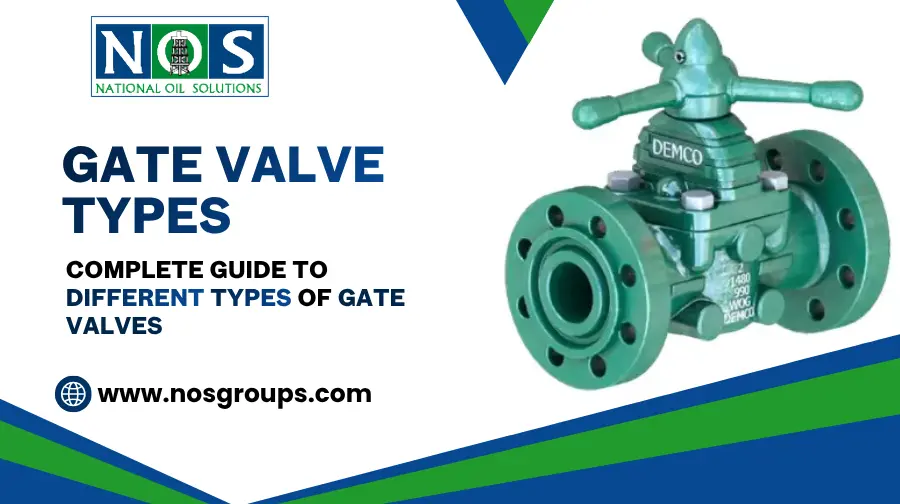
Gate Valve Types: A Complete Guide to Different Types of Gate Valves
Gate valves are linear motion valves used to completely start or stop fluid flow with minimal pressure drop rather than regulate it. There are many different gate valve types, and they are mainly classified by their disk type, stem movement, and body-bonnet connection.
Gate valves are simple tools used to start or stop the flow of liquids and gases inside pipes. Not all gate valve types are similar and built the same way. Some use a wedge shape to block water, while others use a sharp knife edge for thick liquids. They work best when they are completely open or completely closed and must not be used to slow down or regulate fluid speed.
Knowing about the different designs is a must to choose the right option for your project. Read on to learn the main types of gate valve, so you can choose the right type and keep your piping system safe, secure, and leak-free.
Table of Contents
What Is a Gate Valve?
Before we learn about the gate valve types, let us understand what this valve is. A gate valve is a linear motion isolation valve used to completely start or stop the flow of liquids or gases in a pipe. A solid metal barrier inside the valve (disk or gate) moves straight up and down to block and allow the fluid flow through the pipe.
It must be noted that this gate is designed to fully start or completely stop the flow, not to control how much liquid passes through. When the gate is fully lifted, the liquid flows through a clear path without losing any pressure or speed. This valve is usually used in large water supply systems and industrial factories. It must not be used for regulation or throttling of flow by a partially open gate.
Understanding Gate Valve Types: 3 Main Categories
| Gate Valve Type | Main Feature | Common Application |
| Solid Wedge Gate Valve | Single-piece solid wedge | Water, oil & gas systems |
| Flexible Wedge Gate Valve | Flexible wedge design | Steam and water lines |
| Split Wedge Gate Valve | Two-piece wedge | Chemical & industrial systems |
| Parallel Slide / Double Disc | Two parallel discs | Power plants & gas pipelines |
| Knife Gate Valve | Thin, sharp gate | Mining, wastewater & paper mills |
| Resilient Seated Gate Valve | Rubber-coated wedge | Water, sewage & fire protection |
| Rising Stem Gate Valve | Stem moves upward | Waterworks, fire protection & oil/gas |
| Non-Rising Stem Gate Valve | Stem remains fixed | Underground & confined areas |
Gate valves are primarily classified by their disc design, stem movement, and parallel or wedge structure. They are meant for on-off service and must not be used for regulating or throttling flow. Different disk designs help the valve handle temperature changes, harsh fluids, and pressure in special ways.
I. Classification by Disk (Gate) Type
1. Solid Wedge Gate Valve
This type of gate valve features a single-piece, solid wedge gate and offers maximum strength, robust sealing, and simplicity. It is simple, strong, and handles general water or oil flow well but can suffer from thermal binding (jamming) during extreme temperature shifts that distort the valve body.
- Key Benefits: High durability, a simple structure, and very reliable shut-off power.
- Application: It works best for turbulent, high-pressure, or general liquid or gas systems with stable temperatures.
2. Flexible Wedge Gate Valve
This valve features a one-piece wedge (solid disk) with a cast-in groove or special cut around the edge. This small cutout gives the metal room to bend slightly to accommodate pipe misalignments. While its unique design successfully solves the problem of thermal binding, fluid can trap inside the cavity and potentially cause internal corrosion over time.
- Key Benefits: Prevents the valve from getting jammed during fast temperature shifts and provides a better seal in varying conditions.
- Application: It is best for steam systems and water lines with changing temperatures.

3. Split Wedge Gate Valves
A split wedge gate valve is made of two separate metal pieces held together by a special bolt, central pin, or ball-and-socket mechanism. Each half of this type of gate valve can move independently to match the angle of the valve seat, even if the body shifts. As this valve has more internal parts, there is a higher chance of things wearing out or getting loose over time, making it harder to maintain.
- Key Benefits: It stops thermal binding and lowers friction wear during closing. Great sealing for non-condensing gases and liquids.
- Application: It is used in chemical plants and lines with changing pressure or temperature. It is also best for corrosive liquids and high or low temperature or cryogenic services.
4. Parallel Slide/Double Disc Valves
This type of gate valve features two flat, parallel disks pressed against the sides by a spring or special wedge. They slide smoothly past each other to block the fluid opening safely. They prevent thermal transient binding and provide reliable bi-directional sealing. The major drawback of these types of gate valve is that their inner bottom pocket can easily trap dirt and lead to jamming or leaking over time.
- Key Benefits: Avoids sticking from heat and provides a tight seal on both sides. Minimizes wear and tear during operation.
- Application: Commonly used in power generation plants, high-pressure steam systems, and gas pipelines.
5. Knife Gate Valves
The next type of gate valve in this category is the knife gate valve, which has a single, thin, and sharp sliding gate designed like a blade. This sharp bottom edge can easily cut through thick fluids, suspended solids, and slurries to achieve closure. Their drawback is that they are not used for clean liquids, and high-speed flow can make the thin blade vibrate violently, causing quick damage and shortening the valve’s lifespan.
- Key Benefits: Easily handles viscous or abrasive fluids, it is compact and lightweight.
- Application: It is widely used in paper mills, wastewater plants, and heavy mining slurries.
6. Resilient Seated Gate Valve
These gate valve types have a solid metal wedge completely covered or coated with a soft elastomeric rubber like EPDM or NBR. They offer a secure, zero-leakage tight seal at low pressures. The drawback is that the rubber coating can’t handle high temperatures and harsh chemicals. Over time, these tough conditions will tear or swell the coating and can lead to valve failure.
- Key Benefits: It provides a zero-leak seal and stops dirt from blocking closure.
- Application: It is the top choice for municipal water supply, sewage networks, and underground fire protection.



II. Classification by Stem Movement
1. Rising Stem (OS&Y – Outside Screw & Yoke)
In these types of gate valve, the stem stays fixed in height and rotates internally to move the gate. The threaded stem is located outside the valve body. When you turn the handwheel, the stem moves up and down, raising or lowering the internal gate. It needs extra vertical space above the valve.
- Key Benefit: Threaded parts stay clean because they never touch the fluid inside, which prevents corrosion. Very easy to lubricate and maintain from the outside. Easy visual checks for open and closed positions.
- Application: These are used in industries like waterworks, fire protection systems, chemical processing plants, and oil and gas applications.
2. Non-Rising Stem
A non-rising stem gate valve has a compact design where the stem rotates but doesn’t move upward when you open the valve. The stem stays in a fixed vertical position when you turn the handle wheel. The stem only rotates while the internal gate climbs up or down the threads. Threads remain in the fluid path, making them vulnerable to wear and corrosion.
- Key Benefit: These gate valve types are perfect for tight spaces since they require no overhead room. Fewer exposed parts mean they are highly resistant to external damage.
- Application: Great for underground use or confined installations. They are also used in tight valve pits or areas with limited headroom.
III. Classification by Body-Bonnet Connection
1. Screwed Bonnet
This is the simplest and most basic design available for connecting a valve body and bonnet. The bonnet features threads that allow it to be screwed directly into the valve, creating a quick and tight seal. These are great small-sized valves that don’t face extreme mechanical stress. It has a simple and compact design.
- Key Benefit: Highly cost-effective, lightweight, and compact design that is easy to install. Requires basic maintenance.
- Application: Commonly used in low-pressure domestic plumbing, small water lines, and inexpensive gas systems where high temperatures are never a concern.
2. Bolted-Bonnet
This is the most popular and widely used connection type for modern industrial valves. The body and bonnet have matching flanges that are clamped tightly together using a set of heavy-duty bolts and nuts with a sealing gasket placed firmly between them.
- Key Benefit: Great leak resistance under pressure, high durability, and easy disassembly of the valve for regular cleaning.

- Application: Trusted gate valves Saudi Arabia suppliers provide these valves for most industrial applications. Used in oil refineries, chemical processing plants, water treatment facilities, and industrial manufacturing pipelines.
3. Welded-Bonnet
The welded-bonnet design completely eliminates the risk of leaks by permanently fusing the body and bonnet together through advanced welding. This completely eliminates any joints that could loosen over time. It is incredibly strong and reliable, though it makes interior repairs very difficult without cutting the valve.
- Key Benefit: Perfect for high-temperature and high-pressure services where frequent disassembly is not necessary. Remains unaffected by intense pipeline vibrations or thermal shifts.
- Application: Perfect for high-temperature chemical lines, toxic gas transport, and vacuum systems where even a minor leak is highly dangerous.
4. Pressure-Seal Bonnet
These types of gate valve feature a unique design where the fluid pressure inside the pipeline forces the bonnet upwards against a wedge-shaped gasket. This means the sealing force automatically tightens whenever the internal system pressure increases.
- Key Benefit: Unmatched sealing performance at extreme pressures, reduced overall valve weight, and elimination of the need for massive, heavy flanged bolts.
- Application: Used in high-pressure power plants, supercritical steam systems, and severe industrial processes operating above 1,500 psi.
How to Choose the Right Gate Valve Type
Here are the main factors to focus on when choosing the gate valve type:
| Factor | What to Check | Best Choice |
| Fluid Type | Clean, corrosive, or thick with solids | Solid Wedge for clean fluids, Split Wedge for corrosive fluids, Knife Gate for slurries |
| Pressure | Low or high pressure | Screwed Bonnet for low, Pressure-Seal Bonnet for very high |
| Temperature | Stable or changing | Solid Wedge for stable, Flexible or Split Wedge for changing |
| Available Space | Enough headroom or tight space | Rising Stem for open space, Non-Rising Stem for tight space |
| Leak Tolerance | Minor leaks acceptable or zero leaks needed | Resilient Seated for low pressure, Welded Bonnet for high temperature |
| Maintenance Needs | Frequent servicing or rare | Bolted Bonnet for easy servicing, Welded Bonnet for rare |
| Budget | Low cost or long-term durability | Screwed Bonnet for low cost, Bolted Bonnet for durability |
Choose the Right Gate Valve for Your Next Project
Choosing the right type of gate valve for your project is a must to keep operations safe and efficient. Each type we discussed in this blog serves a specific purpose in controlling fluid flow. Understanding these differences helps prevent leaks, reduces maintenance costs, and extends the lifespan of your equipment.
Make sure you work with a trusted gate valves Saudi Arabia supplier offering a wide product range and also helping selecting the right valve type. By matching the valve type to your operational demands, you can ensure uninterrupted flow control.
Get high-quality gate valves in Saudi Arabia from National Oil Groups. Whether you are managing a new installation or replacing old parts, we have the perfect option for you. Let our experts help you choose the best type for your next project. We work with certified manufacturers and deliver perfect valve solutions for your project.
Share your requirements with National Oil Groups to find valve solutions that perfectly match your flow control needs.
Also Read – Diaphragm Pumps in Saudi Arabia: Types, Uses, and Benefits