
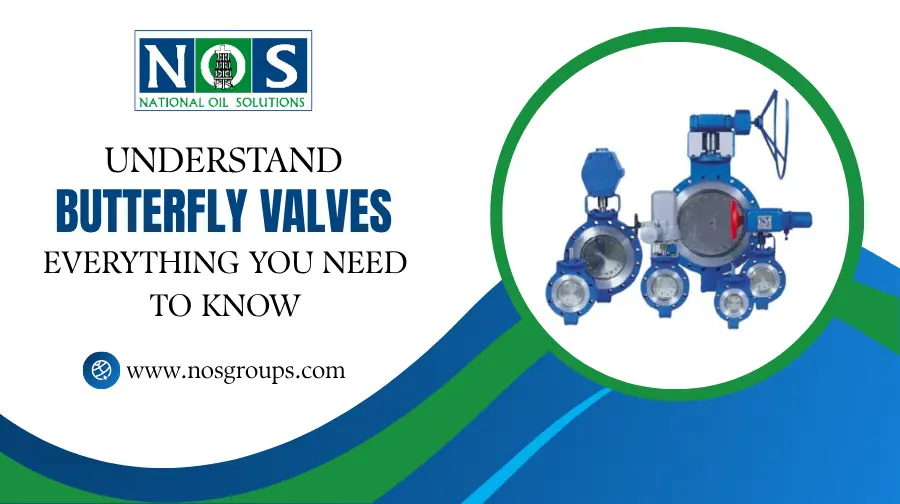
Understand Butterfly Valves Saudi Arabia: Complete Guide
Butterfly valves play an important role in numerous commercial and industrial processes for regulating the movement of fluid substances. The light weight, simple design, and fast operation of the valves enable them to be used in numerous industrial purposes. Moreover, butterfly valves are also economic and robust devices.
There has been a growing demand for butterfly valves in Saudi Arabia owing to the increase in construction, energy, and manufacturing projects. If you are new to valve technology or you want to upgrade your current system, knowing about butterfly valves may come in handy. In this blog post, you will learn everything about butterfly valves, which include their types, pros, cons, and applications.
Table of Contents
What Is a Butterfly Valve?
Butterfly valve is a flow control mechanism employed to initiate, stop, and regulate the flow of fluids or gaseous media in pipelines. It is equipped with a disc that is rotatable by 90 degrees to open or close the flow passage. The disc is mounted within the valve housing and controlled with a shaft. Turning the disc parallel to the flow initiates the flow, whereas rotating it perpendicularly to the flow controls or closes it. Butterfly valves are lightweight, easy to assemble and economical. Butterfly Valves Saudi Arabia find their application in many industries where effective flow control and fast shut-off are required.

Key Components of a Butterfly Valve
Although butterfly valves appear quite basic, there are a number of components that play significant roles in their functioning.
- Valve Body: This is the housing unit for the inner components of the valve.
- Disc: This is a circular disk fitted in the valve whose movement controls the passage of fluids.
- Seat: This is the sealing point of the valve where the disc seals to prevent any leakages. It can be made of rubber, plastic, or metals.
- Stem: This is the shaft that connects the disc to the handle and ensures its movement within the valve.
- Seals: These are elements that prevent leakages in different parts of the valve, especially the stem.



Types of Butterfly Valves
There are different types of butterfly valves used for different needs in a range of sectors. Here is a complete overview:
1. Centric Design Butterfly Valve
- The disc and stem are located at the center of the valve.
- Has a seal made from soft rubber or polymer material.
- Can be used for low to moderate pressure applications.
- Used in the water industry and other general industries.
2. Double Offset Butterfly Valve
- Contains two offset components in its design for the disc and stem.
- Lowers friction that would occur between the disc and seat.
- Provides superior seal compared to centric valves.
- Used in petroleum, natural gas, and chemical industries.
3. Triple Offset Butterfly Valve
- Offers three types of offset to enhance its seal efficiency.
- Generally employs metal seating.
- Can handle high pressure and high temperatures.
- Frequently used in refineries, power plants, and steam applications.
4. Damper Type Butterfly Valve
- Basically intended for the regulation of air/gas flow.
- Often applied in ventilation/exhaust systems.
- Used in HVAC systems, chimneys, and furnaces.
Butterfly Valve Selection Guide
Selecting the proper butterfly valve is dependent on the fluid, operating pressure, temperature, pipeline size, and sealing needs. Here are some considerations before selecting a valve:
| Selection Factor | What to Consider |
| Fluid Type | Check whether the valve will handle water, air, chemicals, oil, or gas. |
| Pressure | Select a valve suitable for the system’s operating pressure. |
| Temperature | Choose the seat and valve material according to operating temperature. |
| Valve Type | Select centric, double offset, or triple offset based on the application. |
| Material | Consider stainless steel, carbon steel, or other suitable materials. |
| Operation | Choose manual, pneumatic, electric, or hydraulic operation as required. |
| Sealing | Consider soft-seat or metal-seat designs depending on the application. |
How Does the Butterfly Valve Work?
The butterfly valve consists of a disc rotating in a pipe to regulate the flow of either liquid or gas through the pipe. Manual valves are opened or closed manually via a lever, while actuated valves are opened or closed using an actuator such as a gearbox to make work easier. Other types of valves use power-driven mechanisms like electric, pneumatic, and hydraulic actuators to open and close the disc.
The Butterfly Valves Saudi Arabia come in manual or actuated types. These valves have applications in oil and gas, water treatment, and HVAC systems.
Applications of Butterfly Valves Across Various Sectors
Butterfly valves are used in various industries for controlling the flow of liquids and gases.
- Chemical & Petrochemical Plants: To control chemical fluid flows.
- Electric Power Generation: To cool water and steam flows.
- Wastewater Treatment Facilities: To control wastewater, sludge and fluid flows.
- Food & Beverage Processing Plants: Sanitary butterfly valves are used to ensure hygiene and avoid contamination.
- Water Supply & Irrigation: To be used in water distribution and pipeline systems for agricultural irrigation.
- HVAC Systems: To regulate the flow of water and air in heating, ventilation and air conditioning systems.
Conclusion
However, the butterfly valves are an effective and economical means for managing the movement of fluids through different systems in industries. Due to their small size, fast opening and closing and high efficiency, they can be used for different purposes. With increasing industrial developments in the Gulf countries, there has been an increased need for butterfly valves in Saudi Arabia.
If you need butterfly valves in Saudi Arabia, the best option to go with is National Oil Groups. We offer reliable and cost-effective valve solutions for oil and gas industries, water treatment industries and others. Contact us today..
Also Read: How Respiratory Protection Equipment Keeps Workers Safe