
Top 10 Types of Pipe Clamps and Their Uses
Pipe clamps secure, align, and support pipes across plumbing, HVAC, industrial, and construction systems. Common types include U-bolt, rubber-lined, risers, clevis, stainless steel, and heavy-duty pipe clamps. Choosing the right clamp depends on pipe size, load, vibration, and corrosion risk.
A piping system has many parts, and every part needs to stay in the right place to work properly. Pipe clamps may look like small fittings, but they play an important role in keeping pipes steady and preventing damage. Different projects need different clamps based on the pipe size, weight, and working conditions. That is why learning about the common types of clamps for pipes helps you understand which option works best for each application.
Table of Contents
What Are Pipe Clamps?
Pipe clamps are simple tools used to hold pipes firmly in place. They connect pipes to walls, ceilings, floors, and other support structures. They help prevent pipes from moving, bending, or falling out of place. They also make piping systems more stable and help protect pipes from damage during daily use. Different pipe clamp types are available for different pipe sizes, weights, and uses, and are used in many places, including factories, buildings, oil and gas plants, and water supply systems.
Why Are Pipe Clamps Used?
Pipe clamps serve several purposes in a piping system. They help keep pipes secure, reduce damage, and make sure everything stays in the right place. Here are some of their main uses:
To Support Pipe Weight: Pipe clamps hold both vertical and horizontal pipes in place. They prevent pipes from bending, sagging, or putting extra pressure on joints.
- To Reduce Vibration and Noise: Rubber-lined and cushioned clamps help reduce shaking and noise when water, gas, or other fluids move through pipes.
- To Handle Temperature Changes: Some clamps allow pipes to expand and contract when temperatures rise or fall. This helps prevent unnecessary pressure on the piping system.
- To Keep Pipes Aligned: Clamps hold pipes in the correct position during installation, welding, and other fitting work.
- To Protect Pipes from Damage: Proper clamps and protective liners help prevent scratches, direct metal contact, and damage caused by movement.
- To Improve Safety: Strong and properly fitted clamps help keep pipes secure and reduce the risk of unwanted movement in industrial systems.
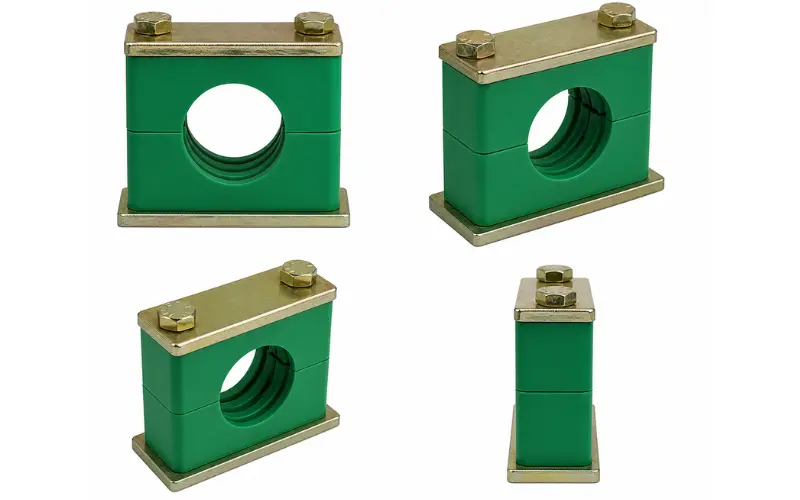
Top 10 Types of Pipe Clamps and Their Uses
Different piping projects need different clamps depending on the pipe size, weight, and working conditions. Here are 10 common types of clamps for pipes used in industrial and construction projects across Saudi Arabia.
| Pipe Clamp Type | Main Use | Common Applications |
| U-Bolt Pipe Clamps | Hold pipes firmly in place. | Walls, beams, and supports. |
| Rubber-Lined Pipe Clamps | Reduce noise and protect pipes. | Factories and oil plants. |
| Two-Bolt Pipe Clamps | Support heavy pipes. | Large factories and industrial plants. |
| Riser Clamps | Support vertical pipes. | Buildings and plumbing systems. |
| Clevis Hangers | Hold pipes under ceilings. | Water and fire safety systems. |
| Stainless Steel Clamps | Resist rust and moisture. | Water plants and outdoor systems. |
| Cushion Clamps | Hold large, heavy pipes. | Oil plants and power stations. |
| Heavy-Duty Clamps | Hold large, heavy pipes. | Oil plants and power stations. |
| Beam Clamps | Support hanging pipes. | Warehouses and factories. |
| Insulated Clamps | Hold insulated pipes safely. | AC and cold water systems. |
1. U-Bolts Pipe Clamps
U-bolt pipe clamps have a U-shaped design with two threaded ends. They are placed around a pipe and tightened with nuts to keep it in place. These clamps help attach pipes to walls, beams, and other strong supports. They also stop pipes from slipping or moving during use. Because of their simple design and strong grip, they are often used on construction sites, oil and gas plants, and industrial projects across Saudi Arabia.
2. Rubber-Lined Pipe Clamps
Rubber-lined pipe clamps have a metal body with a soft rubber layer inside. This rubber layer holds the pipe gently and protects it from scratches and damage. It also absorbs shaking and reduces noise when water, gas, or other liquids move through the pipes. In addition, it helps prevent direct contact between different metals. These clamps are useful in factories, oil and gas plants, and other industrial projects in Saudi Arabia.
3. Two-Bolt Pipe Clamps
Two-bolt pipe clamps have two bolts that help hold pipes tightly from both sides. These bolts spread the pressure evenly, so the pipe stays in place without getting damaged. They are strong and can support heavy pipes. They also help reduce shaking and unwanted movement. These clamps are often used in large factories, oil and gas plants, and other heavy industrial projects. They are a popular choice among buyers looking for pipe clamps Saudi Arabia.
4. Riser Clamps
Vertical pipes need strong support so they do not slide down or move out of place. Riser clamps help do this job. They hold the pipes near floors or other strong supports and carry their weight. They also protect pipe joints and keep everything in place. These clamps are commonly used in tall buildings, factories, and plumbing projects across Saudi Arabia.
5. Clevis Pipe Hangers
Clevis pipe hangers are used to hold pipes that run under ceilings. They have a curved part at the bottom that holds the pipe and a rod at the top that keeps it hanging. This helps keep pipes at the right height and stops them from falling or bending. They are often used in water supply, air conditioning, and fire safety systems. These are also useful pipe clamp types for buildings and factories.



6. Stainless Steel Pipe Clamps
Stainless steel pipe clamps are made to last longer and stay strong. They do not rust easily, even when they come in contact with water or moisture. Because of this, they are a good choice for places where pipes face tough conditions. They are commonly used in factories, water plants, and outdoor piping systems. They also help keep pipes safe and firmly in place.
7. Cushion Pipe Clamps
Cushion pipe clamps are one of the simple pipe clamp types used to protect pipes. They have a soft layer inside that acts like a cushion between the pipe and the metal clamp. This helps stop the pipe from getting scratched or damaged. It also reduces shaking when nearby machines are running. These clamps are often used in air conditioning systems, water pipes, and factories.
8. Heavy-Duty Pipe Clamps
Heavy-duty pipe clamps are made to hold large and heavy pipes. They are stronger than regular clamps and can carry more weight. They help stop big pipes from bending, falling, or moving out of place. These clamps are often used in oil and gas plants, power stations, water treatment plants, and large factories. They are a good choice for Pipe Clamps in Saudi Arabia where industrial projects need strong pipe support.
9. Beam Clamps
Strong metal beams can also be used to hold pipes in place with the help of beam clamps. These clamps attach to the beams and hold rods that support hanging pipes. They do not need drilling or welding, so workers can install them more easily. They are often used in factories, warehouses, and large buildings where pipes run above the ground.
10. Insulated Pipe Clamps
Insulated pipe clamps are used to hold pipes that have a layer of insulation around them. These clamps keep the pipe in place without pressing too hard on the soft insulation. This helps protect the insulation from damage and keeps the pipe at the right temperature. These also help stop water drops from forming on cold pipes. These clamps are often used in air conditioning systems, cold water pipes, and industrial plants.
How to Choose the Right Pipe Clamp for Your Project
Choosing the right pipe clamp is important because every pipe has different needs. Some pipes are large and heavy, while others carry hot or cold liquids. So, before buying pipe clamps in Saudi Arabia, you should check a few things to make sure the clamp fits your piping system properly.
- Pipe Size: First, check the size of your pipe. The clamp should fit around it properly so the pipe does not slip or move.
- Material: Pipe clamps are made from different materials, such as stainless steel and galvanized steel. Choose a material that does not rust easily and works well in your project area.
- Weight of the Pipe: Heavy pipes need stronger clamps. So, always check how much weight a clamp can hold before choosing one.
- Temperature and Surroundings: Some pipes carry hot or cold liquids, while others are placed in wet or chemical-filled areas. So, choose a clamp that can handle these conditions.
- Vibration Control: Pipes near machines and pumps may shake during use. In this case, rubber-lined or cushioned clamps help reduce shaking and protect the pipes.
Conclusion
Choosing the right pipe clamp helps keep pipes in the correct place and stops them from moving or getting damaged. Every clamp has a different use, so check the pipe size, weight, material, and where it will be used before choosing one. A good pipe clamp holds the pipe properly and helps it stay safe for a long time.
If you are looking for a trusted pipe clamp supplier in Saudi Arabia, National Oil Groups is here to help. Our company offers quality pipe clamps along with a wide range of industrial products, equipment, and supply solutions for different industries. Moreover, we focus on providing reliable products at competitive prices, along with timely delivery and helpful customer support. So, you can count on us for quality products and cost-effective solutions for your industrial needs.
Also Read – How Does a Butterfly Valve Work? Working Principle, Types, and Industrial Applications
FAQs
1. What is the main use of pipe clamps?
Pipe clamps hold pipes in place and stop them from moving, bending, or falling. They also help protect pipes from damage.
2. What are the most common types of pipe clamps?
Some common types include U-bolt clamps, rubber-lined clamps, two-bolt clamps, riser clamps, clevis pipe hangers, and heavy-duty clamps.
3. How do I choose the right pipe clamp?
Check the pipe size, weight, material, and working conditions. Choose a clamp that fits the pipe properly and can support its weight.
4. Which pipe clamps are best for heavy pipes?
Heavy-duty pipe clamps and two-bolt pipe clamps are commonly used to support large and heavy pipes.
5. Why are rubber-lined pipe clamps used?
Rubber-lined pipe clamps have a soft layer inside. It protects pipes from scratches, reduces shaking, and helps lower noise.