
Plug Valve vs Ball Valve: Key Differences, Advantages & Applications
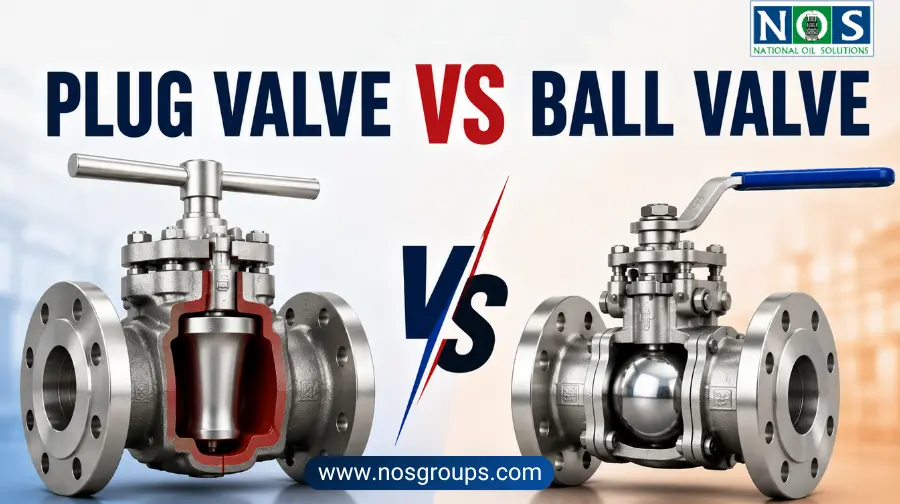
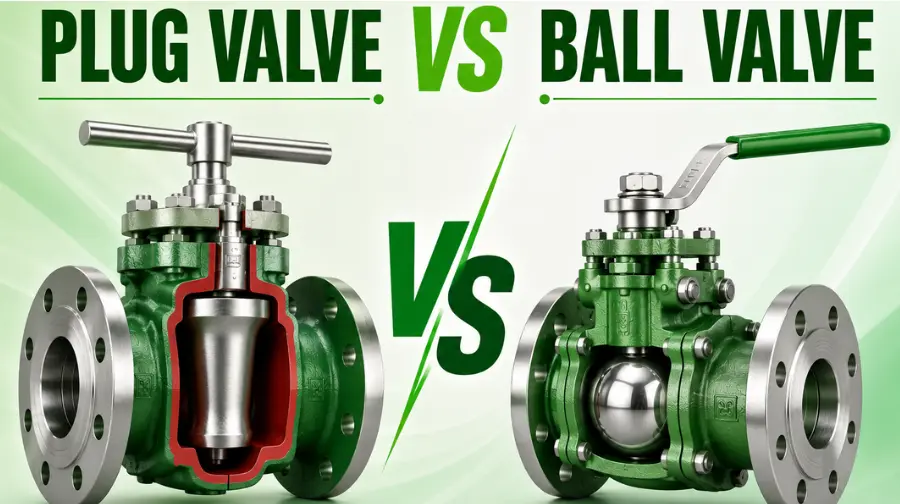
Plug and Ball valves are both quarter-turn rotatory valves that are used to regulate the flow of liquids with different sealing mechanisms. They differ in their internal sealing mechanisms. Plug valves use a cylindrical plug to control the flow, while ball valves feature a spherical disc for the same operation.
The plug valves and ball valves are widely used across various industrial operations in Saudi Arabia, such as oil and gas, power generation, water treatment, etc. While both components serve the same function, “quarter-turn operation,” they differ in construction and operational requirements. Understanding the difference between a plug valve vs ball valve helps you choose the right type of valve for specific industrial needs.
Additionally, the extreme environmental and industrial conditions of Saudi Arabia significantly affect your choice, as each difference between plug valve and ball valve dictates which industry it must be used for.
Table of Contents
Difference Between Plug Valve and Ball Valve
Below is a table comparing plug valve vs ball valve on the basis of their core features:
| Core Feature | Ball Valve | Plug Valve |
| Core Element | Spherical ball with bore | Conical or cylindrical plug with port |
| Sealing Surface | Seat-ring sealing with smaller contact area | Body-plug sealing and larger contact area |
| Operation Torque | Low torque and easy operation | High torque with more operating force |
| Maintenance | Usually replaced and require low maintenance | Serviceable in-line and easy cleaning |
| Flow Restriction | Minimal pressure drop with full-port availability | Higher restriction, depends on port design |
| Leakage Performance | Bubble-tight shutoff and reliable sealing | Good shutoff and lubrication-dependent |
| Typical Applications | Pipelines, water and process systems | Slurries, viscous fluids, and chemical services |
What is a Plug Valve?
A plug valve is a 90-degree rotational valve, designed in a cylindrical or conical shape to provide tight liquid flow sealing in pipelines.
In the Kingdom of Saudi Arabia, they are widely used across oil and gas and petrochemical industrial applications, as they provide full control over flow with tight sealing.
Types of plug valves
1. Lubricated Plug Valve
A special lubricated plug valve is inserted into the system. A lubricated plug valve provides the operator with easy handling, reduces friction, prevents leakage, and ensures tight sealing.
2. Non-Lubricated Plug Valve
Instead of a specialized lubricant, a non-lubricated plug valve features a replaceable plastic sleeve, PTEE, or Teflon covers the valve body to reduce a significant amount of friction.
This type is frequently taken under consideration by industries operating in Jubai Industrial City plants and other areas.
3. Eccentric Plug Valve
An eccentric or “off-center” plug valve is another type of sealing valve that has its plug shifting sideways as it turns, instead of sitting in the middle. This prevents it from rubbing against the valve’s seal, protecting the system’s integrity and life.
4. Multi-Port Plug Valve
A multi-port plug valve acts as a traffic intersection for pipelines. Instead of a single opening or port, features multiple openings, providing smooth flow of gases and liquids in the desired direction.



What is a Ball Valve and Types?
A ball valve is a type of shut-off valve that completely stops the flow of liquids or gases in the pipeline system. It features a spherical disc that rotates when the valve is utilized. The valve provides high durability during high-pressure flow with tight sealing.
Here are the types of ball valves:
1. Floating Ball Valves
Floating Ball Valves feature a non-attached ball, which is pressed against the seat to stop the flow and pulled backwards by turning the valve. It is ideal for low to medium-pressure applications.
2. Trunnion-Mounted Ball Valves
These are heavy-duty valves featuring a ball-sealing function, used in massive oil, gas, and water industries in Saudi Arabia.
3. Full Port or Full Bore Valves
The full port or bore valves feature a ball hole the same as the pipe, reducing blockages, narrowing, or loss of liquid in the pipeline.
4. Reduced Port or Reduced Bore Valves
Features ball of slightly smaller than the pipeline, offering a slight drop in liquid or gas flow pressure.
5. Multi-Port (3-Way and 4-Way) Valves
Valves that feature a 3 or 4-way path, providing smooth diversion for the flow.
6. Body Construction (1, 2, or 3-Piece)
Extra outer metal shells are featured in this type to facilitate repairs, providing long operational life.
Advantages of Plug Valve and Ball Valve
Here are the advantages of the Plug Valve:
- Tight Sealing Mechanism: They feature a tight and larger metal-to-metal sealing mechanism, ideal for resisting wear and tear in the long-term.
- Exceptional for Abrasive Media: Frequently used to handle highly abrasive media, such as sewage, sludge, and slurries.
- Excellent Throttling: Their unique shape stops debris buildup in the system, providing unrestricted flow.
- Simpler Design: Made in a simple design to facilitate easy handling, maintenance, and reduce mechanical failures.
- Multi-Port Capability: It provides port configuration, allowing a single plug to direct flow in different directions.
Here are the advantages of the Ball Valve:
- Low Flow Resistance: The ball valve provides low flow resistance through its unrestricted flow path when it’s fully open.
- Superior Tight Sealing: They are specially built with a shut-off mechanism that helps reduce the leakage risks in the pipelines.
- Low Operating Torque: The ball valves require less force or torque to open or close. It reduces the need for automated actuators and enhances component lifespan significantly.
- High Durability: Ball valves are made up of stainless steel, carbon steel, and brass, or specialized metal alloys, providing them with high durability in the highly corrosive and harsh environments of Saudi Arabia.
- Versatile Actuation: Ball and plug valve suppliers in Saudi Arabia provide versatile valves that can be used for manual, automated, or semi-automated control mechanisms.
Applications of Plug and Ball Valve in Saudi Arabia
Here are the main applications of the plug and ball valves in Saudi Arabia:
| Application Areas | Ball Valve | Plug Valve |
| Oil & Gas Production | Pipeline isolation and wellhead systems | Crude oil handling and flow diversion |
| Petrochemical Plants | Process control and utility services | Chemical transfer and corrosive fluid handling |
| Refineries | Fuel and hydrocarbon isolation | Switching between process streams |
| Water Desalination Plants | Water distribution and isolation | Brine and slurry service |
| Power Generation | Cooling water and fuel systems | Auxiliary process lines |
| Mining & Industrial Facilities | General fluid control | Abrasive slurry and viscous fluid handling |
| Pipeline Networks | High-pressure transmission lines | Multi-port flow routing applications |
| Chemical Processing | Clean liquid and gas services | Frequent on & off and corrosive services |
Conclusion
Plug valves and ball valves are flow 90-degree rotatory valves, engineered specifically to manage the flow of liquids and gases in pipeline systems. The difference between plug valve and ball valve is defined by their internal sealing mechanism. These valves are utilised widely in the oil and gas, petrochemical, marine, refinery, and other industrial operations of the Kingdom of Saudi Arabia.
National Oil Groups, as a widely trusted supplier of engineering goods across the Gulf and GCC nations, provides superior quality plug and ball valves. We offer high-quality products that are sourced only from reliable manufacturers and adhere to strict industrial standards. Therefore, trust us and get superior-quality products from the best plug and ball valve supplier in Saudi Arabia.
Also Read – What Is a Plug Valve? Types, Working Principle, Advantages, and Applications