
Grease Fittings: Types, Functions, and Industrial Applications
Grease fittings help deliver grease to moving parts of machines. They reduce friction, prevent wear, and keep equipment working smoothly. Common types include straight, angled, button-head, flush fittings, and more. They are widely used in industrial machinery, vehicles, construction equipment, and heavy-duty applications.
Machines have many moving parts that need proper lubrication to work smoothly and last longer. Grease fittings make this process easier by providing a simple way to add grease wherever it is needed. They come in different shapes and sizes to suit different machines and working conditions. From factory equipment to heavy construction machinery, these fittings play an important role in regular maintenance. So, knowing about the different types of grease fittings helps you understand how they work and where they are used in different industries.
Table of Contents
What are Grease Fittings?
Grease fittings, also called grease nipples, are small metal parts attached to machines and vehicles. They help us add grease to the parts that move, such as bearings and joints. To do this, we connect a grease gun to the fitting and push grease inside. The grease helps the parts move easily without rubbing too much against each other. As a result, it helps avoid damage and helps the machine work well for a longer time.
How Do Grease Fittings Work?
A grease fitting, also called a Zerk fitting or grease nipple, works like a one-way valve. It allows grease to enter a machine while helping stop dirt from getting inside and grease from coming back out.
- Sealed at Rest: Inside the fitting, there is a small metal ball and a spring. When the grease gun is not connected, the spring holds the ball in place. This closes the opening and helps keep dirt and water out.
- Opening Under Pressure: When you connect a grease gun and pump it, the grease pushes the small ball backward. This opens a path for the grease to pass through the fitting.
- Flow into the Component: Once the opening is clear, the grease moves through the fitting and reaches the parts that need lubrication, such as bearings and joints. It helps these parts move smoothly and reduce friction.
- Closing and Sealing: When you stop pumping and remove the grease gun, the spring pushes the ball back into place. This closes the opening and helps prevent grease from leaking out and dirt from entering.
What are the Different Types of Grease Fittings?
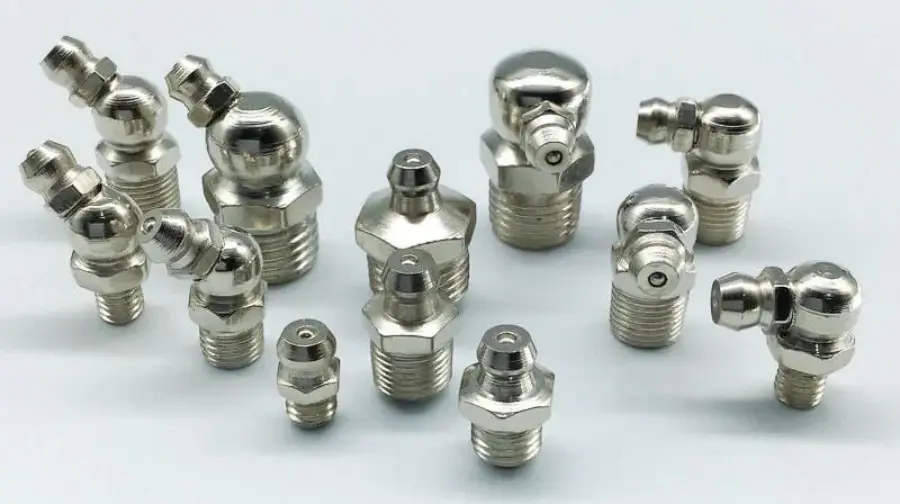
Machines have different lubrication needs, which is why different types of grease fittings are used for different purposes. Here are different types that are designed for different machine parts and spaces.
| Sr. No | Grease Fitting Type | Design and Function | Common Uses |
| 1. | Straight Grease Fittings | Have a straight design for easy grease application. | Open shafts, universal joints, and vehicle chassis. |
| 2. | Angled Grease Fitting (45° and 90°) | Has a bent tip that makes tight spaces easier to reach. | Machine parts behind brackets or other components. |
| 3. | Button-Head Grease Fittings | Have a wide, flat head that connects to a matching grease gun. | Heavy construction equipment, mining machinery, and conveyors. |
| 4. | Flush-Type Grease Fittings | Sit flat against or slightly inside the machine’s surface to prevent damage. | Machinery with limited space around lubrication points. |
| 5. | Drive-Type Grease Fittings | Have ridged sides and are tapped or pressed into suitable unthreaded holes. | Machines designed for drive-in fittings and certain repairs. |
| 6. | Remote Grease Fittings | Use a tube or hose to bring a hidden lubrication point to an easier-to-reach location. | Large machines with hidden or hard-to-reach parts. |



What Are the Functions of Grease Fittings?
Grease fittings, also called Zerk fittings or grease nipples, help add grease to machine parts without taking the machine apart. They also help keep dirt out and hold the grease inside.
- Easy Lubrication: They provide a connection for a grease gun to add grease directly to bearings, joints, and other moving parts.
- One-Way Valve: A small spring-loaded ball inside the fitting opens when grease is pushed in. It closes again when the grease gun is removed.
- Keeps Dirt Out: The closed valve helps stop dust, dirt, and moisture from entering machine parts.
- Keeps Grease Inside: The valve helps prevent grease from leaking or flowing back out during normal use.
- Reduces Friction and Wear: Grease creates a thin layer between moving parts, which helps them move smoothly and reduces damage and heat.
Industrial Applications of Grease Fittings
Machines have moving parts that need grease to work well. Grease fittings help add grease to these parts without taking the machine apart. They are used in many industries to keep machines in good working condition.
- Manufacturing Industry: Factories use grease fittings in machines, motors, and conveyor belts. Grease helps these parts move easily and stops them from wearing out too soon.
- Automotive Industry: Cars and trucks have moving parts, such as joints and bearings, that need grease. A grease fitting helps add grease to these parts, so they work smoothly.
- Construction Industry: Machines like excavators, loaders, and bulldozers carry heavy loads and work in dusty places, and they need different types of grease fittings. These help workers add grease to these machines and keep their parts working properly.
- Agriculture Industry: Tractors and harvesters work in muddy and dusty fields, so their moving parts need regular greasing. The right grease fitting types make it easier to add grease and keep farm machines working well.
- Mining Industry: Mining machines work with heavy loads in rough places. Grease fittings help add grease to their moving parts, which makes them move smoothly and helps prevent damage.
- Marine Industry: Boats and other marine equipment often come into contact with water and salty air. Grease fittings help protect their moving parts from rust and damage, so they last longer.
How to Choose the Right Grease Fitting
Choosing the right grease fitting helps keep machine parts properly lubricated and working smoothly. Here are some simple points to consider before choosing one.
- Space: Choose a straight fitting for easy-to-reach parts, an angled fitting for tight spaces, or a remote fitting for hard-to-reach places.
- Pressure: Make sure the fitting can handle the pressure needed by your machine. Always check the machine’s instructions.
- Material: Choose steel for general use or stainless steel for places where rust and moisture are a concern.
- Thread Size: Check the hole’s thread size and type so the fitting fits properly.
- Grease Gun: Make sure the fitting matches your grease gun so you can add grease easily.
- Working Conditions: Think about where the machine works. Heat, water, dust, and heavy knocks can affect the fitting, so choose one that suits these conditions.
Tips for Maintaining Grease Fittings
Regular care helps grease fittings work properly and last longer. Follow these simple tips to keep them in good condition.
- Clean Before Use: Clean the fitting with a cloth before adding grease. This helps stop dirt from entering the machine.
- Check for Damage: Look at the fitting to see if it is blocked, leaking grease, or showing signs of rust. If you find any problem, fix it before using it again.
- Use the Right Tools: Use the correct grease and a grease gun that fits the fitting. This helps add grease properly.
- Avoid Too Much Grease: Add grease slowly and stop when enough has entered the machine. Too much grease or pressure can damage the seals or other parts.
- Replace Damaged Fittings: If a fitting is broken or does not work properly, replace it with a new one. Also, check and care for the fittings as part of the machine’s regular maintenance.
Conclusion
Grease fittings are small parts that play an important role in keeping machines working smoothly. They help add grease to moving parts, reduce wear, and prevent damage. So, choosing the right fitting and taking proper care of it helps machines last longer and work better.
National Oil Groups helps you find the right products for your needs. Whether you need grease fittings for factory machines, vehicles, or heavy equipment, National Oil Groups helps you choose a suitable option. Our company also offers product support and services at reasonable prices, which makes it easier to find the right solution for your work.
Also Read – What is a DNV Offshore container?
FAQs
What are the different types of grease fittings?
The common types of grease fittings include straight, angled, button-head, flush-type, drive-type, and remote fittings. Each type is designed for different machine parts and spaces.
What is a grease fitting?
A grease fitting is a small metal part attached to a machine. It allows workers to add grease to moving parts using a grease gun without taking the machine apart.
How do you choose the right grease fitting?
Choose a fitting based on the available space, thread size, working pressure, and machine type. Also, make sure it fits your grease gun and suits the machine’s working conditions.
How often should grease fittings be greased?
The greasing schedule depends on the machine, how often it is used, and its working conditions. Follow the manufacturer’s instructions to know when to add grease and avoid using too much.
Can grease fittings be replaced?
Yes, damaged or blocked grease fittings can be replaced. Always choose a fitting that matches the machine’s thread size and type.