
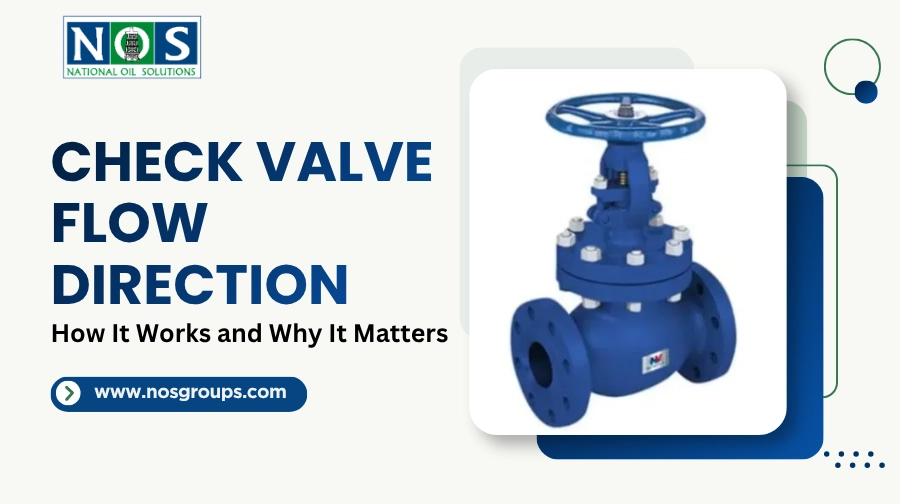
Check Valve Flow Direction: How It Works and Why It Matters
A check valve is a one-way mechanical device that lets fluids and gases flow in a single direction, automatically reversing flow using internal pressure changes.
A check valve is a small component of the piping system, but installing it in the wrong direction can result in serious problems. It is designed to let fluids travel in one direction and stop them from flowing backward. Thus, knowing this check valve direction, how it works, its importance, and what can happen if it is installed incorrectly is important in ensuring proper installation and maintaining system performance.
Table of Contents
What Is a Check Valve?
A check valve is a one-way valve that allows liquids and gases to flow in one direction and prevents them from coming backwards automatically. The valve operates based on fluid pressure and opens when fluid flows in the specific direction and closes to prevent reverse flow.
Applications of check valves in Saudi Arabia:
- Oil, Gas, and Petrochemicals
- Water and Wastewater Treatment
- Power and Energy Generation
- Fire Protection Systems
How Does Check Valve Direction of Flow Work?
A check valve works by controlling the flow of liquids in the intended direction using internal components such as balls, discs, or poppets. These components close tightly against backpressure, stopping fluids from flowing in the opposite direction.
Here is how check valve direction of flow works:
Forward Flow (The Opening Phase)
- Fluids enter the inlet port of the check valve.
- The pressure builds inside, reaching the threshold of cracking pressure.
- Once the incoming fluid’s pressure is strong enough to overcome spring force, gravity, or the weight of the disc, it pushes the closing part away from its seat.
- The valve opens, allowing the fluid to flow through to the outlet.
Reverse Flow (The Closing Phase)
- When the fluid tries to flow backward towards the inlet, the mechanism changes.
- That reverse pressure, spring, or gravity then pushes the internal part of the valve onto its seat.
- This, as a result, creates a tightly closed seal that stops the backflow of fluids completely, preventing contamination.
Types of Check Valves and Their Flow Directions
Here are the types of check valves and their flow directions:
1. Swing Check Valve
A swing check valve is a mechanical device that uses a hinged disc that swings open to let the fluids flow forward and closes to prevent coming backwards.
- Water Pipelines
- Wastewater Systems
- Pump Discharge Lines
2. Lift Check Valve
A lift check valve is a non-return automatic valve that uses a disc that lifts when fluid pressure is sufficient and returns to its seat when the flow in the system reverses.
- Industrial Pipelines
- Steam Systems
- Oil and Gas facilities
3. Ball Check Valve
A ball check valve features a ball that moves from its seat to provide space for fluids to flow and comes back to block the backward flow.
- Wastewater Treatment
- Drainage Systems
- Water Pumping Systems
4. Spring-Loaded Check Valve
A spring-loaded check valve uses an internal spring with a movable stopper that enables fluid travel and backward flow prevention.
- Desalination Plants
- Water Treatment Systems
- Industrial Piping
5. Dual-Plate and Wafer Check Valves
A dual-plate and wafer check valve uses two plates that open with forward flow and close when the flow reverses.
- HVAC Systems
- Industrial Plants
- Large Water Distribution Networks
Why Is Correct Check Valve Flow Direction Important?
Here is why the correct check valve direction of flow is important:
- Prevents Reverse Flow: It stops fluids from flowing backwards and helps prevent contamination in pipelines and water systems in Saudi Arabia.
- Protects Pumps and Equipment: It prevents damage to impellers, seals, bearings, and other equipment due to unwanted pressure changes and reverse flow.
- Improves System Efficiency: Check valve direction maintains the flow of fluids, improving system efficiency.
- Reduces Maintenance and Costs: It also helps reduce equipment wear, unexpected repairs, and downtime.



Check Valve Installation: What Things to Check
Look at the things you should check before installing a check valve in Saudi Arabia:
| Installation Check | What to Do | Why It Matters |
| Flow Direction Arrow | Make sure the arrow points in the direction of fluid flow. | Prevents incorrect installation and flow blockage. |
| Valve Orientation | Check if the valve is suitable for horizontal or vertical installation. | Helps the valve open and close properly. |
| Pressure Requirements | Make sure the fluid pressure is sufficient to open the valve. | Ensures proper fluid flow through the valve. |
| Pipe Connections | Ensure all pipe connections are properly aligned and secured. | Helps prevent leaks and damage to connections. |
| Material Compatibility | Choose a valve material suitable for the fluid and operating conditions. | Helps prevent corrosion, especially in saline-water applications in Saudi Arabia. |
| Final Inspection | Check fluid flow and inspect for reverse leakage after installation. | Confirms that the valve is working correctly. |
What Happens If a Check Valve Is Installed Backward?
Look at the immediate consequences, equipment damage, and other risks if check valves are installed incorrectly:
| Category | Consequence | Description | Solution |
| Immediate Consequences | Complete Flow Blockage | Stops fluid or gas flow through the pipe. | Inspect and clean the valve. |
| High Pressure Buildup | Causes dangerous pressure buildup. | Check pressure and relieve excess pressure. | |
| Loud Noise and Vibration | Creates loud noises and pipe vibrations. | Inspect and repair the valve. | |
| Equipment Damage and Risks | Pump Burnout | Causes pump overheating and motor failure. | Stop the pump and check the valve. |
| Seals and Pipe Ruptures | Excess pressure damages seals and pipes. | Repair leaks and inspect pipe joints. | |
| Compressor Failure | Prevents restarting and may trigger the safety valve. | Inspect the check valve and compressor. |
Conclusion
A check valve is a critical mechanical device that is used in many industrial applications in Saudi Arabia. It helps businesses maintain fluid flow and prevent backflow and contamination in the piping systems that could lead to equipment damage. By considering a trusted check valve manufacturer in Saudi Arabia, you can acquire high-quality valves that meet industrial standards and offer reliable performance.
If you are a business looking for a trusted check valve manufacturer in Saudi Arabia, connect with National Oil Groups. We are a reputable provider of engineering products and industrial equipment in Saudi Arabia. Our check valves are engineered to withstand frequent industrial use, providing great performance in challenging industrial operations. Thus, contact us today and get your check valve solutions in Saudi Arabia.
Also Read – Grease Fittings: Types, Functions, and Industrial Applications
Frequently Asked Questions:
1. Which way should a check valve flow?
A check valve should allow flow in only one direction.
2. How do you know which way a check valve goes?
You can look for a raised arrow cast or stamped onto the outside of the check valve to understand which way it goes.
3. Can a check valve be installed vertically?
Yes, a check valve can be installed vertically, but only under certain circumstances.
4. Does a check valve need a minimum pressure to open?
Yes, a check valve requires a certain level of minimum pressure to open.
5. What happens if a check valve is installed backward?
Things that can occur if a check valve is installed backwards:
1. Complete Flow Blockage
2. High Pressure Drop and Strain
3. Loss of Protection
4. Equipment Damage
6. How can you tell if a check valve has failed?
Here is how you can check if a check valve has failed:
1. Looking at Reverse Flow
2. Water Hammer or Loud Banging
3. Vibration and Chattering
4. Pressure Drops or Cycling Issues
5. Sticking or Leaking